Message from Bishop David Anderson
| 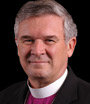 | Bishop Anderson |
Dear Brothers and Sisters in Christ, Having spent the first sixty-two years of my life in the American Episcopal Church (TEC), thirty-six of them in Holy Orders, I thought that I knew something of TEC and its ways. While I was in active ministry, I served in the dioceses of Washington, D.C., Montana, Wyoming, South Dakota, and finally in Los Angeles, where I retired. Now in so-called retirement and as a Bishop Suffragan for CANA (Nigeria), I have had closer contact with many African Anglican provinces as well as the Church of England. I have discovered the complexity and, at times, the confusion of the family called "Anglican." As the Anglican Church in North America (ACNA) builds its body of canon law, and as its constituent dioceses build theirs, there is an examination of the TEC tradition behind the canon law and custom, as well as that of the Anglican Church of Canada. It is fair to pose the question - what is authentic Anglican tradition? Much like quantum physics and the Heisenberg Uncertainty Principle, it depends on where you are and when you ask the question. In the old days when I was growing up as a lay person in TEC, it seemed like a diocese worked best when the bishop was like a weak English monarch (No, seriously! Bear with me.) who had to work with both the House of Commons and the House of Lords to see desired outcomes reached. In those days, the bishop needed to have the support of key, powerful parishes whose laity would work with him, and he needed the support of the cardinal rectors of the diocese, who would help build consensus among the clergy. All in all, when things were in balance, no one order unduly abused the other, and the (non-Hooker) three-legged stool was more or less level. Or at least that is how it was perceived to work. Today, with TEC's new Title IV canon law revisions due to go into full force and effect in less than 30 days, it is clear that a decades-long process of power shifting has taken place. Vestries and the local incumbent priests have lost power to the office of the diocesan bishop, and the local diocesan bishop is about to lose considerable power to the Presiding Bishop and her/his top leaders. We note that Bishop Stacy Sauls, who is also an attorney and has played a major part in defining TEC's legal strategy toward departing congregations, has just been appointed as TEC's Chief Operating Officer. Does the timing of this appointment have anything to do with the upcoming canon law revisions? |
|
|
It is argued today by TEC lawyers in much of their litigation that the parish vestries function on behalf not only of the parish that elected them but also on behalf of the diocese and national church, and that they have a fiduciary responsibility to all three. It is true that national and diocesan canons all have text that speaks to the number, or qualifications, etc., of vestry members and wardens, but the text of diocesan canons varies considerably, and although dioceses may establish standards for vestry and wardens, for example, requiring them to be baptized and perhaps confirmed, no supervision of the parish election by the diocese takes place. Vestries and wardens are nominated, elected, and installed with no oaths or promises exacted from them to represent the best interests of the diocese or national church. Now this is undoubtedly changing, as TEC seeks to tighten up their command and control apparatus, but the past fifty year's history of TEC would argue against a three-fold fiduciary responsibility.
In their litigation strategy, TEC has devised a concept called ultra vires or ejectment, which means that when a vestry member first thinks about the local church leaving TEC, with or without the property of the church corporation, that thought itself, even if not spoken out loud, results in a disqualification and ejectment of that vestry person based on a (TEC-perceived) breach of fiduciary responsibility to the diocese and national church. Good Grief! Now even your thoughts aren't safe - and for those whose thoughts vacillate between staying or leaving, you already committed the infraction and the TEC Thought Police have arrived. There are things that most of us have thought about doing or saying, then reconsidered and changed our mind. From TEC's perspective, it's too late; you had the thought, and out you must go.
If vestry and wardens are to serve a fiduciary responsibility for all three entities, parish, diocese and national church, it would be reasonable for the selections to be approved by the upper two bodies, and for an oath to be taken by the vestry swearing to uphold such a relationship. I know that I sound antiquated when I say this, but in my day there wasn't such an expectation. Additionally, if a vestry has a fiduciary responsibility to all three entities, what happens when there is a conflict between what is in the best interests of the local church and the diocese, for instance? My personal belief is that the concept of the vestry having a fiduciary responsibility beyond the parish corporation which elected them is, as one of the 39 Articles puts it, "a vain thing, fondly invented...." This new concept is not unlike the Dennis Canon which was imposed on vestries from on high - without their permission as directors of the incorporated local church. Who would have believed that another entity could impose a trust on your property in their favor without your permission? And if that isn't amazing enough, the fact that several courts have been too lazy to really investigate this and have gone along with it is truly stunning.
So, back to the question, "what is authentic Anglican tradition?" First, I encourage you to watch this week's Anglican Perspective video, which touches on this very subject (it's only 2 minutes long and well worth your time). We are discovering that the American way is very different from the Canadian way, and different from the way in England and other parts of the world. How priests are appointed, what a license to minister means and what happens when it is lifted, how bishops are chosen, and how everybody is paid or not varies a great deal from place to place. As we go into the future, for the orthodox Anglicans in TEC and the Anglican Church of Canada, the challenge will be to live faithfully while their church is straying further and further into polytheism and away from the singularity of Christ as Savior. For those in the ACNA, the challenge will be to take the best of what was in the Anglican Church of Canada and in TEC, leave the rest behind, and blend it with the best practices in other successful parts of the growing Anglican family. The challenge for all the faithful is to teach and preach the true and complete Gospel of Jesus Christ to a very confused world, and then to try very hard to live into that Gospel ourselves, that our words might match our message.
As I write this on Thursday, we are celebrating the Ascension of our Lord Jesus Christ, and the remaining days to Pentecost. May our Lord bless and guide you in your service to him.
Blessings and peace in Christ Jesus,
The Rt. Rev. David C. Anderson, Sr.
President and CEO, American Anglican Council
|
|

No comments:
Post a Comment