Saturday, December 31, 2011


America's Marriage Rate Plunges - Mike McManus

America's Marriage Rate Plunges

By Mike McManus
December 28, 2011

Only 51 percent of Americans are currently married - a record low - down from 72 percent in 1960, according to a Pew Research Center analysis of Census data.

There are three major factors behind these trends.

First, the number of never-married Americans has nearly doubled from 15 to 28 percent from 1960-2010. Pew said that many couples are cohabiting instead of marrying because "they fear divorce." Why? Many are adult children of divorce who do not want to live through such pain again.

Second, the number of divorced and un-remarried people has grown from 5 to 14 percent of the population.

Third, in the last 50 years the age at which people marry has jumped six years to 26 for women, and for men, to 29 years. Today only a fifth of adults aged 18-29 are married vs. three times as many in 1960, 59 percent.

Read the full story at www.VirtueOnline.org

“Sacred Assembly” Called for Those Who Remain Connected to Rwanda

I just received this invitation via email. The assembly is scheduled to begin just as the AMiA Winter conferenceends--with one day of travel time included. The official guest list is, perhaps, the most significant aspect of the invitation
Dear Friends,

Please consider this email your invitation to attend: Moving Forward Together in Raleigh NC January 16th to 18th, 2012.

Moving Forward Together is a sacred assembly of worship, reconciliation, and connection will be held January 16 to 18th in Raleigh, NC at Church of the Apostles (333 Church at North Hills Street Raleigh, NC 27609).

Guests: Bishops from Rwanda including Archbishop Rwaje (PEAR), and Archbishop Bob Duncan (ACNA) and others leadership in North American Anglicanism.

Who is invited: Laity and Clergy who are either currently connected to Rwanda or those who would like more information about what it means to be under the oversight and leadership of the Province of Rwanda.

Cost of the Assembly: $125 per person

Assembly Schedule:
Begins @ 3.30 pm on Monday ending at lunch-time on Wednesday.

Meals provided: Dinner Monday, Lunch Tuesday, and Dinner Tuesday evening.

How to Register? Go to http://www.missionrwanda.org where we have an online
registration with a Pay Pal component. This registration will be
available on January 3rd, 2012.

What can we expect?
1. Plenary Sessions led by Archbishop Rwaje and other leaders
2. Breakout Sessions to explore and consider our future together
3. Breakout Sessions to explain canonical and jurisdictional
questions and issues
4. Worship, Prayer, Eucharist for a time of repentance and healing

For Assembly Questions, please contact...

(CNS) Nigerian bishops urge government to get control after church bombings

Catholic leaders condemned the spate of bomb blasts in Nigeria and urged the government to get control of security.

Lagos Cardinal Anthony Olubunmi Okogie criticized the government for its failure to protect citizens.

Speaking at the dedication of St. Peter Church in Awka, the cardinal said the spate of bombings in a four-day period makes people wonder "what the government is doing with our money. If they cannot protect the lives of its citizens, then why do we have a government?"

Read it all.

Bishops say Rule on Gay Parents Limit Freedom of Religion

The New York Times:
For the nation’s Catholic bishops, the Illinois requirement is a prime example of what they see as an escalating campaign by the government to trample on their religious freedom while expanding the rights of gay people. The idea that religious Americans are the victims of government-backed persecution is now a frequent theme not just for Catholic bishops, but also for Republican presidential candidates and conservative evangelicals.

“In the name of tolerance, we’re not being tolerated,” said Bishop Thomas J. Paprocki of the Diocese of Springfield, Ill., a civil and canon lawyer who helped drive the church’s losing battle to retain its state contracts for foster care and adoption services.

Friday, December 30, 2011


Is the AMiA changing course?

 An interesting read over at A Living Text by Joel Martin.  Catch it all here.

AMiA Upheaval – A Changing Course

Some interesting analysis of the most recent letter from the Pawley's Island AMiA group -- peruse the entire piece:
The Pawleys letter blames the new bishops in PEAR for wanting to “exercise much greater control over the day-to-day operations and direction of the Anglican Mission, moving in a direction that is inconsistent with anything that had been fully discussed or engaged in over the past thirteen years.” Why is this a bad thing? Is the oversight of the Kolini era, which appears to have been no oversight, the only acceptable form of ecclesiastical relationship? What does it say to Archbishop Duncan as he weighs allowing these bishops into some form of relationship with ACNA? It seems that Archbishop Duncan, or anyone else, should not exercise any meaningful oversight over this group, because they can’t handle it.

The Pawleys letter then describes the missionary society yet again. No one from Pawleys has yet made an argument for why this society is necessary. The Church by her very nature is to be a missionary endeavor. The Great Commission is part of the warp and woof of every single church. Further, ACNA is clearly committed to evangelization. Further still, AMiA used to claim the narrative of “Rwanda re-evangelizing America.” So what possible need is there for yet another change in structure, ecclesiology, and theology? To me, it suggests a greater desire for autonomy, control, and theological deviation from Anglican norms. There is no pressing missiological reason for AMiA to adopt a new structure.

The letter says “For today, we will leave the details of these past nine months to history. Things will all be made clearer as the dust settles, as relationships are restored and truth comes to light…We will not speak further of what has happened save in the pursuit of reconciliation among our Houses.”

This reflects the apparent belief of Pawleys Island that they are in possession of the true narrative of what has happened. They have not provided an account of why Bishop Murphy separated from ACNA in 2010, only to now approach ACNA again in a time of distress. They have not accounted for Canon Donlon’s activities, or the reason why Donlon inserted provisions for ‘a missionary jurisdiction, a missionary society, or an extra-territorial missionary diocese’ in Title Six of the Rwandan Canons way back in 2007. Historically, PEAR never had any extra-territorial outreach, but Donlon saw fit to provide for three alternate structures for such a purpose in their canons. As someone told me, “It looks like Murphy was putting the possibility of these structures in place to accommodate his future plans as early as 2007.” Truth is indeed the daughter of time.

The Pawleys letter says:
Although several options have been considered and have presented themselves to us, in prayer and conversation with many of you, it became clear that a process of discernment should first be engaged with the Anglican Church in North America.

Note the claim of “several options.” My take on this is that the clergy, baffled by what had just occurred, pressed their leaders in the conference call with Doc Loomis, to work with ACNA. So bishops Loomis and Johnston are now working with ACNA “first” but not exclusively. What may develop is a conflict between Bishop Murphy’s desire for control and continued leadership, versus ACNA’s desire for legitimate Anglican structures. Also, how does ACNA bring in at least seven more bishops for 80-100 churches? The bishop to laity ratio is becoming absurd in the rump AMiA. Add to this the desire to make Shuler a bishop and who knows how many other potential bishops in waiting (all declined by the PEAR HOB this summer) and you have a more and more top-heavy structure, despite protests to the contrary.

All the Biblical literacy that’s fit to print

A couple of weeks ago, we looked at the widely circulated error that William Butler Yeats was the author of Hebrews. The New York Times messed it up. So did the Associated Press. The BBC, too. All in a story about the death of George Whitman, a Paris bookstore owner.
Commenter George Harper wrote:
Yesterday I emailed the Times to request a correction. As of today I’ve received no acknowledgment and there’s been no correction.
Well, I’m happy to report that while it took a week, a correction was obtained:
Correction: December 21, 2011
An obituary on Thursday about George Whitman, the longtime owner of the Shakespeare & Company bookstore in Paris, referred incorrectly to a quotation written on a wall of his store. The words “Be not inhospitable to strangers, lest they be angels in disguise” are a variation on a passage from the Bible; although Mr. Whitman himself attributed them to the poet W.B. Yeats, they were not written by Yeats.
I don’t believe other outlets have gotten around to correcting their error. I’d still like to know why Whitman thought this was attributable to Yeats. It’s a poetic line and Yeats certainly knew his Scripture. Perhaps it was contained or referenced in something he wrote and the allusion was lost on Whitman? I’m unsure. Do let us know if you’ve heard.
In any case, Eric Metaxas — author of this year’s hit Bonhoeffer: Pastor, Martyr, Prophet, Spy — was the first person I saw complaining about the error and he wrote something about it headlined “Does Anyone in the Media Ever Read the Bible?
Don’t answer that. Just kidding, but here’s a snippet of his jeremiad:
[T]his obit must have been written years before, as such obits usually are, waiting quietly in the files for their elderly subjects to pass on. It would have been dusted off every few years and updated and — presumably — rechecked.
So when I read the Yeats supergoof, I wondered: where were the fact-checkers? Is the secular bias at the Times so pervasive that it has affected not just the writers but the fact-checkers too? Or has being out of touch with middle America so hurt the Times’s subscription base that they cannot afford fact-checkers anymore?
When I first wrote about this on my Facebook page I was excoriated by an acquaintance who writes for the Times. He thought I was simply being too harsh. Perhaps I was. After all, as Sammy Davis, Jr. once remarked, “Judge not, lest ye be judged.”
But to get serious, if I had one wish for American in 2012, I wish that we would get to know the Bible better. Even if you aren’t a believer there are incredible stories in the “good book” that I guarantee you will keep you glued to the page. The Bible is no less a part of our cultural heritage than Shakespeare is — and by the way, Shakespeare’s plays are absolutely loaded with Biblical references.
Of course, ignorance about Scripture is not limited to members of the media. I’m surprised at how many of my irreligious friends are ignorant about how many literary works allude to the Scriptures. When one of my friends became Christian, he kept being surprised at how things he thought were from Shakespeare were actually from the Psalms or other parts of Scripture.
Maybe the folks at the New York Times should just read their own paper. Here’s the first line of Marilynne Robinson’s interesting look last week at great works that engage Biblical questions:
The Bible is the model for and subject of more art and thought than those of us who live within its influence, consciously or unconsciously, will ever know.
It is funny, though, to have the paper that wants to issue a religious litmus test to political candidates fail the entrance exam on Biblical literacy.
Bible picture via Shutterstock.

Thursday, December 29, 2011


ANGLO-CATHOLICS GONE WILD


UPDATE: Mr. Kevin Babb has dug up some information on Cardinal Johnson.  Let’s just say that His Eminence’s processional doesn’t go all the way into his sanctuary if you know what I mean and I think you do.

Generations in the church and their duties to each other

In The Christian Science Monitor, author Courtney E. Martin notes a distinct paradox that, for her at least, doesn't really demand resolution.
We [in the Millennial Generation] are less religious than either the boomers or even Gen-Xers were at our age. Whereas generations past might have formulated their ethical values from the lessons of formal religious figures – priests, rabbis, imams – we are far less connected to them and, at the same time, have come of age during the great disintegration of institutions. Everything once anointed – from the nuclear family to Wall Street, from Penn State football to the Roman Catholic Church – has fallen, not on our watch, but as we were watching....
[W]ith ever more complicated ethical knots to untangle, it seems we've never had so few formal tools. For instance, fewer young Americans rely on Scripture as a way to understand what we are reading, watching, and experiencing on a daily basis. Instead, as columnist David Brooks posits, we are "social animals," constructing modern-day moral codes from a wide variety of source materials....
Even if many Millennials don't identify with an organized religion, we still, at base, hunger for a spiritual source.
Which is all to say, not that the youngest Americans are lost, but that we are searching for new ways of understanding who we are, why we are on this Earth at this horribly unjust, incredibly promising time, and what we are meant to do about it. We're not reaching for the old maps, and doubt that they would work even if we did. Instead we've got a solid sense of direction and the reassuring knowledge that every generation before us also inherited a swiftly changing world that demanded ethical ingenuity and spiritual reinvention.
If the generation in question really does find itself proceeding into a morass of increasingly ambiguous ethical and moral decision making (and that's certainly what it feels like), shouldn't it want every available tool at its disposal?

My own generation - GenX, characterized as shiftless yet searching - often feels as though it has elected to set formal religion to one side. Perhaps coming of age in an era of burgeoning rigidity for political correctness means that it's wrong to be so specific about the places whence one derives one's tools: that the Golden Rule is sufficient unto itself and doesn't need to have come from anywhere or any one in particular; or that the idea that it's wrong to suppress a resident alien is generally good on its own terms. There is also the impulse to disavow the bad and only keep the good, and distance from the source quickens that process until the point of Jesus' whole life - just in the instance of Christianity - is "Be a good person."

I don't mean that Jesus would not have advised us to be good people. I just mean there's more to it than that. A religious system of thought - with all its good and bad laid out for examination, all its narrative and ethical fundament, rightly divided and rightly understood - is a much more serviceable and flexible faith. A comprehensively instilled faith has fewer excuses for forgetting who and what it is or where it came from, and those are things that happen to matter.

To put it differently. In this season of Christmas, our celebration of the redeeming nature and love of God takes a specific shape and form. Jesus has a body, which makes him inherently specific and political, and he occupies a given span of time about which we daily strive to learn more. When he tips tables in the Temple court or (as in the question of the lawfulness of taxes) tells Caesar he can have his face back, that's specific criticism levied at a specific and concrete institution, but such criticism is funded out of both his religious heritage and the nature of who he is.

Oversimplification and disconnection from narrative, on the other hand, without the backgrounding, is a disservice. Millennials may be as Martin characterizes them, and at the same time they may be hungering after something prior generations are altogether too embarrassed to be specific or passionate about.

ANGLO-CATHOLICS GONE WILD

A couple of weeks back, Damian Thompson had an amusing post on the so-called episcopi vagantes or “wandering bishops.”  In older times, these were bishops who may have been driven from their sees by the Muslims, for example.  Nowadays, these are “bishops” who have left Catholic, Orthodox or Anglican churches and gotten themselves pointy hats and hooked sticks from someone who claims apostolic succession usually through groups like the Old Catholics of the Netherlands.

There’s even a modern name for this phenomenon, the “Independent Sacramental Movement,” and it seems to cross denominational lines.  As we see fairly regularly, many of these “bishops” consider themselves Roman Catholics.  And you can’t swing a dead Northern pig-tailed macaque without hitting an Anglican with his or her very own crozier, miter and episcopal or primatial see.

If you’re interested in pursuing this subject, Thompson recommends Bishops at Large by Peter Anson.  A Strange Vocation lets these “bishops” tell their own stories and seems to take them seriously while, according to its reviewers, Episcopi Vagantes and the Anglican Church takes a much more skeptical line.
The reason I bring all this up is that I think I’ve found an Anglican church that has taken all this to a whole new level:

The Anglican Rite Roman Catholic Church is a historical community of the Catholic Faith in the Anglican Tradition. Stemming from its historic Patriarchal See, distinct from the Anglican Ordinariate and the Continuing Anglican organizations, and not affiliated formally with any other Anglican or Catholic organization except as stated, it operates worldwide to spread the missionary Gospel of the pilgrim Church. We are distinct in that we openly embrace both the Anglican Rite and the Roman Rite in our liturgy, theology, and practices. Blessed with the gift of autonomy and independence, and in spiritual unity and sympathy with His Holiness, Benedict XVI, we work to exemplify the example of our Lord through the Charism of the Holy Spirt and the Intercessions of Our Lady in the daily advance of spiritual discipleship as our Anglican Rite Catholic Faithful advance in their daily walk with Christ.
Free from the constraints of traditional jurisdiction and political intrigue, our authority originates in Christ Jesus, in unbroken Apostolic Succession from St. Peter, Prince of the Apostles and includes the fullness of Anglican and Roman Catholic succession. Though independent, we recognize the Primacy of the Bishop of Rome, successor to the See of St. Peter, as First Among Equals of all Catholic Bishops in unity worldwide.

But Chris!  Why are you tell us this?  The Roman Catholic Church already has an Anglican rite.  True.  But this isn’t it.

Q: Why is the church name the “Anglican Rite Roman Catholic Church?”
A: Because this is an accurate statement of what we are and how we are distinct in the simplest terms possible. We are Roman Catholics in descent from the See of Utrecht who also have the heritage of the Anglican Church.

Q: What does it mean to be “Anglican Rite Roman Catholic?”
A: This Church’s name reflects that it is a particular Church in both Anglican and Roman Catholic Apostolic Succession. As such, the Church enjoys the heritage of both expressions of the Christian Faith. This is particularly significant since it was Rome that founded the Anglican Church when St. Augustine of Canterbury was sent by Pope Gregory the Great to the British Isles. We also enjoy the blessing, privilege, and responsibility of autocephalous government. By being blessed with and accepting our true nature as an Anglican and Roman Particular Church, we have achieved a special sort of unity so rarely seen in the Church since the Protestant Reformation.

Q: Are you under direct Papal leadership?
A: No, we have independence of ecclesiastical government. We do, however, maintain a spiritual unity with Rome and accept the Bishop of Rome as First Among Equals, Vicar of Christ, etc.

Do you think your Anglican church has its own bishop?  Don’t bring that lame-ass smack around this church, yo.  Meet the world’s first Anglican cardinal.

His Eminence Rutherford Cardinal Johnson is the Patriarch of the Anglican Rite Roman Catholic Church. He previously served as 6th Bishop of the Diocese and 1st Metropolitan of the Archdiocese of the Southwest. He was elected Patriarch of the Anglican Rite Roman Catholic Church in 2011 by the Patriarchal Electors. By his office, he holds the titular See of Leopontopolis as Archbishop in partibus infidelium and Cardinal-Deacon of Santa Maria Antiqua in camera persona.

Did I happen to mention that he’s also a Patriarch?  Shouldn’t leave that out, I guess.  I’ve never heard of Leopontopolis but then again, Leopontopolis has probably never heard of me so that’s fair.

Here’s a picture of His Eminence.  I don’t know what that long red train is called but chances are pretty good that it’s going to end up at the other site.  My man’s got his own Patriarchal Household along with a Curia whose offices have their own seals.  And His Eminence even issues encyclicals.

pecusa liberal: perish the thought


Why not to ask ACNA into the Communion

It's the time of year for informally discussing the future as we look to 2012.
Mark Harris considers a recent blog entry by his acquaintance Peter Carrell, who asks,
Give one good reason for ACC 2012 not to invite ACNA to join the Anglican Communion.
Harris responds, helpfully I think, that there are two reasons:
Because no Communion of Churches in its right mind will deliberately include a new member church that exist precisely because the new member Church believes an existing member church to be un-Christian, heretical and not truly Anglican. Because the Anglican Communion has some interest in being in its right mind, that is a communion in which scripture, reason and tradition all play a part in discernment, the Anglican Communion will avoid, if at all possible, doing something as blatantly stupid as inviting membership from a church already a break-away from a member body....The second reason (just for added fun) that the ACC can not "invite the ACNA to join the Anglican Communion" is that the ACC can't invite any church to join something other than itself. Becoming part of the Anglican Consultative Council puts a church on "the list of member churches." Being on the ACC list makes one a member church of the Anglican Communion as it is understood by ACC itself. How well that list matches with the list of Church bishops invited to Lambeth, or Primates invited to the Primates Meetings is another question.
How would you advance this discussion? Or is sufficient unto itself?

WASHINGTON, DC: IRD's Top Church News Stories of 2011

WASHINGTON, DC: IRD's Top Church News Stories of 2011
Episcopal lesbian "marriage" by Massachusetts Bishop Tom Shaw cited

By Jeff Walton
www.TheIRD.org
December 28, 2011

Mainline church disputes, threats to religious freedom and budget battles made news throughout 2011. Below are IRD's top church news stories for the year.

Church officials respond to the death of Osama Bin Laden: Torn by pacifist misgivings, many Mainline Protestant officials and liberal Evangelicals reacted negatively to the May 1 killing of al-Qaeda's chief terrorist. Officials of the Presbyterian Church (USA) and the National Council of Churches refrained from agreeing with President Obama's assertion that "justice has been done" in the U.S. military raid. Others, like emergent church guru Brian McLaren, bemoaned young Americans who celebrated in the streets. These religious voices implied that lethal force was never acceptable.

Read the full story at www.VirtueOnline.org

Wednesday, December 28, 2011


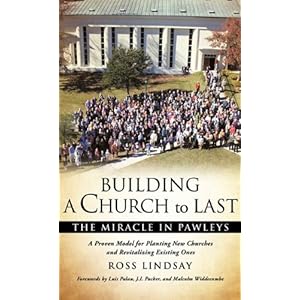
Building a Church to Last: The Miracle in Pawleys

Building a Church to Last: The Miracle in Pawleys
A Proven Model for Planting New Churches and Revitalizing Existing Ones

By Ross Lindsay

Reviewed by David W. Virtue DD
www.virtueonline.org
December 27, 2011

Despite a recent split in The Anglican Mission in the Americas (AMIA), one cannot help but echo the words of Dr. Luis Pulau, "I love the local church. Big or small, charismatic or conservative, the local church is one of the most important institutions - the only established structure that Jesus left for us on this earth. It is his vehicle for ministry. It is his bride."
The Anglican Mission in the Americas (AMIA) was a wake-up call to The Episcopal Church that she would no longer own the whole Anglican ballpark in North America. That day was done.

Enter Chuck Murphy.

Anglicans had been worshipping at All Saints, Pawleys for over 250 years when the Vestry in 1982 called Charles Hurt Murphy III, affectionately known as "Chuck," to become their twentieth rector and senior pastor. Average Sunday attendance was 75, typical for Episcopal congregations. Twenty years later, average Sunday attendance at All Saints passed the 800 mark. Pawleys became one of the largest Episcopal congregations in the country.

Read the full story at www.VirtueOnline.org

Stinging Rebuke of ECUSA Head

OneNewsNow.com
The Episcopal Church of Sudan has turned thumbs down to the head of the church in America.

Presiding Bishop Katherine Jefferts Schori had been invited there, but the Episcopal Church of Sudan has now disinvited her, citing the American church's "flagrant disregard" for biblical teaching. Jeff Walton of the Institute on Religion & Democracy tells OneNewsNow the invitation retraction was specifically because the Episcopal Church USA has strayed from biblical teaching on human sexuality.

"The Episcopal Church of Sudan has distanced itself from the leadership of the U.S.-based Episcopal Church," he shares, "and it has also reaffirmed or recognized its relationships with both conservative, biblically orthodox parishes within the Episcopal Church and the Anglican Church in North America, the rival conservative body [to ECUSA]."

According to Walton, the move represents a significant break in the relationship.


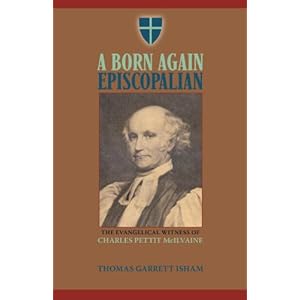
A Born Again Episcopalian: The Evangelical Witness of Charles Pettit McIlvaine

A Born Again Episcopalian: The Evangelical Witness of Charles Pettit McIlvaine

By Thomas Garrett Isham
Special to Virtueonline
www.virtueonline.org
December 27, 2011

Reviewed by the Rev. Roger Salter

This superb biography of Charles Pettit McIlvaine is exactly what is needed at this time. Long overdue attention is at last given to one of the greatest and most gifted servants of Christ and country that this nation has produced. McIlvaine was a stalwart defender and advocate of Reformational orthodoxy in his day and an influence for righteousness and stability when the viability of the United States was in question. Restored to deserved prominence he can once again show the way to church and citizenry. The man himself is sympathetically and honestly portrayed with great pastoral benefit to those who read about him. The account of his faith and spiritual struggles is immensely encouraging. His efforts for the cause of Christ invigorate present day believers for the task at hand in contending for the truth of divine revelation.

The influences that came to bear upon this patently genuine man of God bring us the echo of great Christian personalities who were either predecessors or contemporaries and it is stimulating to note the allusions to the Synod of Dort, George Whitefield, Charles Simeon (his ministerial model), Thomas Chalmers, and Charles Hodge. His views on the desired blend of Presbyterianism and Episcopalianism in church polity remind us of James Ussher and Richard Baxter.

Read the full story at www.VirtueOnline.org

Tuesday, December 27, 2011


Alister McGrath: Christmas in the Cave

It's always nice to learn something new. I was talking to some Lebanese students in London recently. They were looking forward to returning home for Christmas, and celebrating this great feast in traditional Lebanese style. In the West, we think of Christ lying in a manger in a stable. In Lebanon, I was told, Christians depict the nativity as taking place in a cave. The reasons for this are lost in the mists of time. Yet the image of Jesus being born in a cave is rich and suggestive.

As we reflect on what Christmas means for billions of Christians across the world, this image can help us unlock some of its themes, and help us understand why it is seen as being so significant....

Read it all.

A Good Christmas Reminder: A bit of George Lindbeck’s review of the Myth of God Incarnate (1977)


Neither spiritual nor religious

Cathy Grossman of USA Today looks at some recent polling data and finds that a fast-growing segment of the American population is just not all that interested in religion one way or another.
•44% told the 2011 Baylor University Religion Survey they spend no time seeking "eternal wisdom," and 19% said "it's useless to search for meaning." •46% told a 2011 survey by Nashville-based evangelical research agency, LifeWay Research, they never wonder whether they will go to heaven. •28% told LifeWay "it's not a major priority in my life to find my deeper purpose." And 18% scoffed that God has a purpose or plan for everyone. •6.3% of Americans turned up on Pew Forum's 2007 Religious Landscape Survey as totally secular — unconnected to God or a higher power or any religious identity and willing to say religion is not important in their lives.
Hemant Mehta, who blogs as The Friendly Atheist, calls them the "apatheists"
The Rev. Mariann Edgar Budde, Episcopal Bishop of Washington D.C., calls them honest.
"We live in a society today where it is acceptable now to say that they have no spiritual curiosity. At almost any other time in history, that would have been unacceptable," Budde says.
She finds this "very sad because the whole purpose of faith is to be a source of guidance, strength and perspective in difficult times. To be human is to have a sense of purpose, an awareness that our life is an utterly unique expression of creation and we want to live it with meaning, grace and beauty."

SCREWTAPE PROPOSES AN EPISCOPAL TOAST (18)

SCREWTAPE PROPOSES AN EPISCOPAL TOAST (18)
With Apologies to C.S. Lewis

By David W. Virtue
www.virtueonline.org
December 26, 2011

My dear Wormwood,

It is hard not to imagine the enormous damage this Jefferts Schori woman is doing to her church and faith. I doubt we could have come up with someone like her - a woman who spent most of her early life examining squid and then does a 180-degree turn and examines Scripture with the clinical detachment of a plate of fried calamari. Our Father says she will be given first class accommodations when she arrives here, at least for a while, but never enough ease for the torment that will follow.

She has undermined their wretched faith and the weak-willed House of Bishops who follows her like lemmings over a cliff. They are simply unaware (or refuse to see) that she has given the whole shop away....to us. There is always the concern, though we admit rather limited, that the penny might suddenly drop as the church slowly empties and she as Presiding Bishop declare a "national state of calamity". With your help this will not happen.

It never ceases to amaze us, Wormwood. In the old days, we had to work hard for converts. Newer atheists like Richard Dawkins, Christopher Hitchens, and Sam Harris (to name perhaps the three most famous examples) proudly proclaim from whatever atheistic minaret they can find that the idea of God is a delusion, that the God of the Bible is not great, and that "faith" should be are our best advertisers. They were difficult converts, but once seduced, they became some of our best agent provocateurs. They are, of course, the heirs of such minds as A. J. Ayers, H.G. Wells and the Bloomsbury set. Wells' book Mind at the End of its Tether almost gave the whole game away. Mercifully the book never went viral.

Read the full story at www.VirtueOnline.org

Monday, December 26, 2011


Radical sect escalates religious violence in Nigeria

The New York Times covered the appalling violence that an extremist Muslim sect perpetrated on Christians on Christmas.
A series of apparently coordinated bombings struck three churches during Christmas services across Nigeria on Sunday, killing more than a dozen people and solidifying a recent escalation in violence by a radical Muslim sect.At least five bombings were reported, including three at churches and one at a state security building. The worst appeared to be at a packed Catholic church just outside the capital, Abuja, where a bomb tore through the building and killed at least 16 people as they left a morning mass.
Charred bodies littered the street and twisted cars burned in front of the church. Rescue workers struggling to cope with the chaos faced a shortage of ambulances for the dozens of wounded and an enraged crowd that initially blocked them from entering the church until soldiers arrived to restore order.
The militant sect Boko Haram, which seeks to impose Islamic law across the country, claimed responsibility for several of the bombings and was suspected in others.

Sunday, December 25, 2011


Samuel Wells—Christmas is really for grown-ups

We don't want the cozy Christmas story besmirched by...tawdry human and political realities.

So we get youngsters to perform our nativity plays. We talk about how magical this season is. We say "Christmas is really for the children." How ... convenient.

But that's not all you find, when you sit in a market square in Delhi and see adults performing the Christmas story in an open-air nativity play. There's more. You see that Christmas is about people struggling, not just politically, but personally. Everywhere you look in the Christmas story you see people clinging on with their fingertips to life, to sanity, to respectability, to hope.

Read it all (my emphasis).

Rwandan Archbishop Affirms Barnum and Glenn as AMIA Bishops in the US

Rwandan Archbishop Affirms Barnum and Glenn as AMIA Bishops in the US
Rwaje praises support from ACNA Archbishop Robert Duncan

December 23rd, 2011

Dear brothers and sisters in Christ,

Grace and peace to all of you in the name of our Lord Jesus Christ.

As this season of Advent leads us to the celebration of our Lord's birth, we are thankful for many things. Truly, He is with us, in fulfillment of the ancient promises and His own. The House of

Bishops of the PEAR have just concluded a very important meeting this week in Rwanda and Archbishop Rwaje has asked us to forward a letter from him to you.

Read the full story at www.VirtueOnline.org