Friday, March 30, 2012


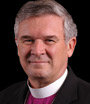
Message from Bishop David Anderson 
Bishop Anderson
Bishop Anderson

Dear Brothers and Sisters in Jesus Christ,

As we prepare for Palm Sunday and Holy Week, the transition from the "Hosanna's" of the palm-strewn road to the grief of the Via Dolorosa becomes quite jarring. Although it all was within God's larger plan for our redemption, the betrayal of Jesus by one he trusted, the crowds shouting "crucify him," and his treatment at the hands of the soldiers, even to his death, leaves us wanting and needing the good news that the tomb is empty and Jesus is alive.

I think betrayal by someone you trust is particularly hurtful. Clergy, attorneys, teachers, doctors, and bankers are all supposed to assist you within their professional relationship, hence when one is betrayed or defrauded by a priest, pastor, attorney, teacher, doctor or banker it is arguably worse than a robber simply sticking a gun in your ribs and demanding your money.

This brings to mind the relationship that bishops and clergy have, and the lack of trust that can develop. In the increasingly totalitarian culture of The Episcopal Church (TEC) - a culture which brought you the new Title IV Disciplinary canons which afford no due process, no right to a trial, and, for priests, no right to face your accusers - the bishops of TEC have borrowed a page out of Alexander Solzhenitsyn's "Gulag Archipelago."  In that great work, the Soviet government accused dissidents and malcontents of "mental illness," and then shut them away in the gulags under the guise of psychiatric treatment for mental health. The reasoning was that anyone who opposed the Soviet government and culture must be crazy.

That same reasoning seems to have infected the minds of some TEC bishops.

For the last seven or more years, TEC has had in its playbook a process for getting rid of troublesome conservative priests. Over these years, the AAC has quietly counseled with many of the priests as they discovered that their bishop, feigning genuine concern for the priest, was working to deftly remove him.
The betrayal usually starts with a liberal revisionist bishop and a conservative parish and priest. The bishop's plan is to remove the priest, put a liberal priest in as an interim rector, drive away the more conservative parish members and reshape the beliefs of those that remain. Step one is a phone call to the priest.

Someone in the bishop's office phones the priest and says the bishop wants to schedule an appointment to see him as soon as possible, no clues given as to the reason for the meeting. When the meeting takes place, the bishop says that he has received several phone calls from parishioners who are worried about the priest and his emotional health. Feigning concern, the bishop tells the priest he wants him to meet with the diocese's psychologist or psychiatrist, to establish a base line and see how the diocese can help. If the priest resists, he is given a "godly admonition" to do it, on pain of discipline if he refuses. This is a trap, and unless the priest follows a defensive plan immediately, he is toast - burned toast.

The priest meets with the bishop's psychologist or psychiatrist, who then finds what the bishop wants: emotional fatigue, depression, and some sense of imbalance. The priest asks for a copy of the report but is refused on the grounds that the bishop has labeled it confidential and the priest will have to discuss it with the bishop, who also refuses him a copy. The bishop says he wants to protect both the priest and the congregation, so he temporarily suspends the priest from active duty ("Administrative Leave" under the new Title IV canons), requires the priest to undergo therapy and rest and stay away from the church, meanwhile appointing an interim priest to reshape the congregation in the original priest's absence. Months drag on and the priest will never return to that church.

What should you, the priest do in this situation? When the bishop asks you to meet with a psychologist/psychiatrist, you should agree to the meeting, but schedule it, and if necessary reschedule it, far enough out for you to quickly approach a non-biased psychiatrist and ask for a full psychiatric workup. Time is of the essence - this needs to be done before the meeting with the bishop's appointed psychiatrist.

Assuming that the non-biased psychiatric workup is reasonably favorable, keep a copy in your possession. Also have in your possession a copy of the HIPPA regulations concerning patients' rights and penalties for non-compliance; the AAC can help you get a copy if necessary. When you meet the bishop's mental health evaluator, after the interview and testing is completed, ask for a copy of his evaluation to be sent to you. If/when he or she refuses, remind the doctor of the HIPPA requirements, and pull out your copy with appropriate lines highlighted. At that point, also mention that you have just recently had a complete psychiatric workup at your request, and would the doctor like a copy of that?

If the bishop's doctor writes an unfavorable mental health evaluation, advise the doctor and the bishop that in light of the previous evaluation you wish to have the two reports reviewed by a non-biased, mutually agreed-upon doctor. If the bishop and the doctor don't agree, advise the bishop and the doctor that you intend to file a grievance with the licensing board naming both of them. The real intent is to block the bishop's further punitive action against you, but the only way to do this is from a position of preparedness and strength.

Sadly, these tactics are still being used in the United States today, and priests have to be careful. If your sermons are recorded and if you email, blog, tweet and text, things that you say or write will travel far and fast.

For all of my readers who have a godly and just bishop, give especial thanks to God this Holy Week. You can take part in the renewal of ordination vows in Holy Week without crossing your fingers or wondering if the bishop has you on his short list for a gulag.

Faithfully in Christ,

+David

The Rt. Rev. David C. Anderson, Sr.
President and CEO, American Anglican Council

No comments: